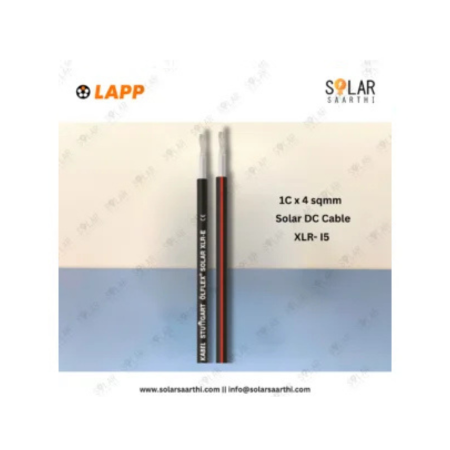
1×4 Sqmm Lapp Solar DC Cable
The 1×4 Sqmm Lapp Solar DC cable is a high-performance, single-core copper conductor specifically engineered for interconnecting solar panels and connecting PV arrays to string inverters. As a leading solution in the renewable energy sector, this cable is designed to withstand the extreme environmental stresses of outdoor solar installations, including high thermal loads, constant UV radiation, and mechanical abrasion.
System Overview
In a solar photovoltaic system, the DC cable serves as the primary artery for energy transport. The 1×4 Sqmm Lapp cable utilizes finely stranded, tinned copper conductors to ensure maximum conductivity and flexibility. It is protected by a dual-layer insulation and jacket system made of electron-beam cross-linked specialized compounds. This cross-linking process enhances the material’s resistance to melting and environmental cracking, ensuring the cable maintains its electrical integrity over a service life exceeding 25 years.
Key Features and Functions
- Tinned Copper Conductor: Provides superior corrosion resistance, especially in humid or coastal environments, and ensures long-term solderability and low contact resistance.
- Electron-Beam Cross-Linked Insulation: Offers high thermal stability, allowing the cable to withstand short-circuit temperatures up to 250°C and continuous operating temperatures up to 120°C at the conductor.
- UV and Ozone Resistance: The outer jacket is specifically formulated to resist degradation from sunlight and atmospheric ozone, preventing the insulation from becoming brittle.
- Halogen-Free and Flame Retardant: In the event of a fire, the cable does not emit toxic halogen gases and resists the spread of flames, significantly increasing system safety.
Operational Importance
The 4 Sqmm cross-section is the industry standard for most residential and commercial solar strings, providing an optimal balance between current-carrying capacity and voltage drop management. Using a high-quality cable like Lapp prevents common system failures such as Potential Induced Degradation (PID) and insulation resistance faults that can lead to inverter shutdowns. Its robust construction ensures that energy losses are minimized, and the return on investment for the solar power plant is protected against the rigors of long-term outdoor exposure.
Reviews
There are no reviews yet.